
Choosing a shower wall material is not just a design decision. The material affects how the shower looks, how much cleaning it requires, how complicated the installation is, how easily it can be customized, and what kind of maintenance you may be dealing with years from now.
Tile, acrylic, fiberglass, and PVC composite can all be used to create a functional shower, but they are very different products. Tile offers the most design freedom but introduces grout and a more complex installation. Fiberglass is simple and practical but offers fewer design options. Acrylic provides a smooth, grout-free surface with a cleaner finished look. PVC composite combines a grout-free surface with a wider range of patterns and finishes, making it an appealing option for homeowners who want both design flexibility and easier maintenance.
For homeowners who want to balance appearance, maintenance, and long-term value, PVC composite is one of the strongest all-around shower wall options. Tile still offers the most design freedom, while fiberglass generally offers the lowest upfront cost.
There is no material that wins every category. The right choice depends on your budget, the look you want, how much maintenance you are willing to do, and how long you plan to live with the finished shower. Here is what to know before choosing.
Tile Shower Walls
Tile is the traditional choice for a fully customized shower. Rather than installing a manufactured wall panel, the shower is built using individual tiles over a prepared and waterproofed shower assembly. That gives homeowners far more control over the finished design than most panel systems.
Tile can be ceramic, porcelain, natural stone, glass, or another material, and it can be installed in countless sizes, patterns, colors, and layouts. Niches, borders, accent walls, mosaics, and other details can all be incorporated into the design. If creating a one-of-a-kind shower is the top priority, tile is difficult to beat.
Where Tile Performs Well
The biggest advantage of tile is customization. It can work with unusual shower dimensions, architectural details, custom niches, benches, and highly specific design plans. Individual damaged tiles may also be replaceable without replacing an entire wall, provided a matching tile is still available and the underlying shower assembly is sound.
Tile itself can also be extremely durable. Porcelain and ceramic surfaces can hold up for many years when the shower is properly built and maintained.
What to Consider Before Choosing Tile
The finished tile is only the visible layer of the shower. Tile and grout are not the waterproofing system by themselves, so proper preparation and water management behind the surface are critical. The shower pan, substrate, waterproofing, drainage, setting materials, grout, sealants, and installation all play a role in how the complete shower performs.
Grout is the most noticeable maintenance difference compared with panel systems. It creates hundreds of joints across the shower that can collect soap residue and discolor over time. Depending on the grout and tile used, additional sealing or maintenance may also be required. Cracked grout or deteriorated caulk should be addressed rather than ignored.
Tile installation is also labor intensive because the shower has to be prepared, waterproofed, laid out, tiled, grouted, and finished. That additional labor can make a professionally installed tile shower one of the more expensive options. More elaborate patterns, niches, benches, and specialty tile can add even more complexity.
Acrylic Shower Walls
Acrylic shower walls are manufactured panels with a smooth, nonporous finished surface. Instead of building the visible wall one tile at a time, larger panels or surround components cover the shower walls, eliminating traditional grout lines.
Acrylic is commonly encountered in replacement shower systems because it can create a clean, uniform shower with less installation complexity than a custom tile build.
Where Acrylic Performs Well
Maintenance is one of acrylic’s biggest advantages. A smooth surface without traditional grout joints gives soap residue and mineral buildup fewer places to collect and removes grout cleaning from the maintenance routine.
Acrylic is also relatively lightweight and can be manufactured in different colors, textures, and patterns. Because the finished surface is part of the manufactured panel, there is no separate tile-setting and grouting process.
What to Consider Before Choosing Acrylic
The tradeoff is design flexibility. Homeowners choose from the colors, textures, patterns, sizes, and configurations available from the manufacturer rather than creating a completely custom wall from individual materials. Some acrylic systems can imitate tile or stone, but the finished appearance and texture are still determined by the product line.
Acrylic can also scratch, and abrasive cleaners can damage some surfaces. Care instructions vary by manufacturer, so the approved cleaning products and warranty terms should be checked before choosing a system.
Fiberglass Shower Walls
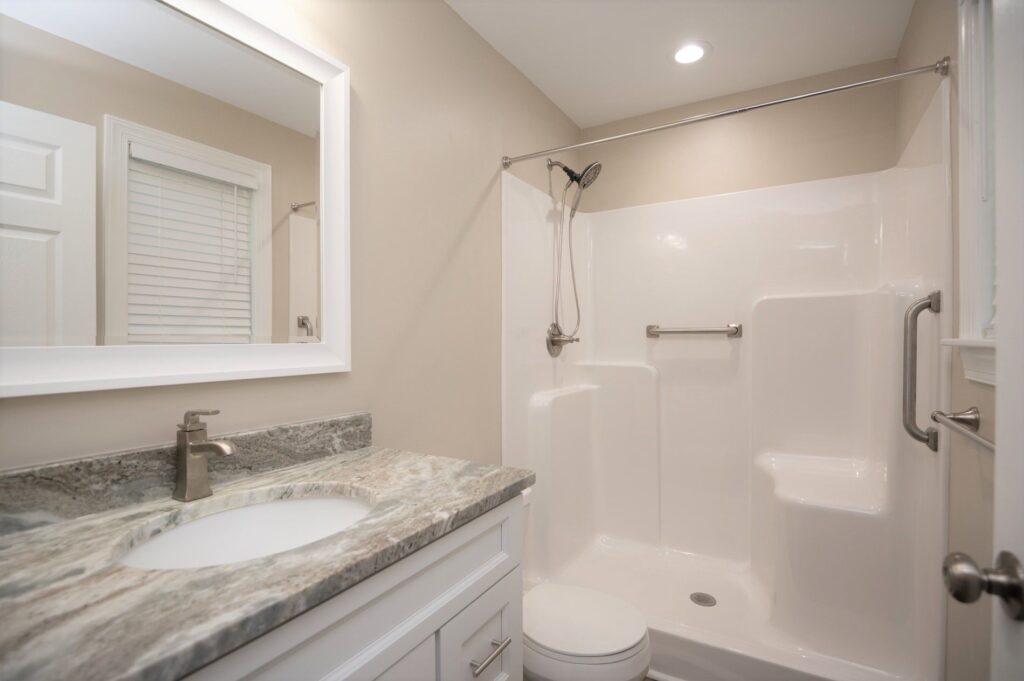
Fiberglass showers are molded from fiberglass-reinforced material and are commonly sold as one-piece units or multi-piece surrounds. They are widely used in standard-size bathrooms because they provide the walls and, in many systems, the shower base in a relatively simple package.
Where Fiberglass Performs Well
Fiberglass is lightweight, does not require traditional grout, and is generally straightforward compared with building a custom tile shower. It is also typically one of the lower-cost shower wall options, making it a practical choice for a basic secondary bathroom, rental, or project where function matters more than creating a highly customized focal point.
A molded unit also reduces the number of joints across the shower surface. One-piece units have especially few seams, although getting a large one-piece unit into an existing bathroom can be difficult when doorways and finished walls limit access.
What to Consider Before Choosing Fiberglass
Fiberglass offers fewer design choices than tile and other higher-end panel systems. Standard molded shapes and sizes can also limit how much the shower can be tailored to an unusual space.
Over time, fiberglass surfaces can become stained, faded, or dull, particularly as the finish ages. Proper care can help preserve a fiberglass shower’s surface and appearance. In particular, avoiding abrasive cleaners and harsh scrubbing helps reduce scratching and surface wear.
PVC Composite Shower Walls
PVC composite shower walls use larger manufactured panels rather than individual pieces of tile. The panels create a continuous finished surface without the field of grout joints found in a traditional tile shower, while patterns and finishes can reproduce the look of stone, marble, tile, and other materials.
That combination is what makes PVC composite worth considering separately from basic prefabricated surrounds. It is designed to deliver the practical advantages of a panel system without forcing the bathroom into the plain, molded look many homeowners associate with older fiberglass showers.
Where PVC Composite Performs Well
Maintenance is a major advantage. With no traditional grout lines running across the walls, there are fewer joints to scrub, fewer places for discoloration to develop, and no grout surface to maintain. For a homeowner replacing an older tiled shower specifically because the grout has become a constant cleaning problem, that is a meaningful difference.
PVC composite also offers more visual flexibility than a basic white surround. Available patterns and finishes can create the appearance of stone or tile while keeping the wall surface grout-free. Larger panels can also be cut and fitted to the shower space, which gives the installer flexibility when working with different wall dimensions.
Because the finished wall is installed as a panel system, installation does not require setting and grouting hundreds of individual tiles. The complete remodel may still involve demolition, plumbing, wall preparation, a shower base, fixtures, glass, storage, and other work, but the wall installation itself is different from a traditional tile build.
The PVC composite systems offered by American Contracting are backed by a lifetime warranty, which is another factor to consider when comparing the long-term value of different shower systems.
What to Consider Before Choosing PVC Composite
PVC composite still does not offer the unlimited design freedom of individual tile. You are selecting from the manufacturer’s available patterns and finishes, and the quality of printed stone or tile patterns can vary between products. Seeing samples in person is useful if the realism of a particular pattern is important to you.
It is also important not to judge a shower system by the wall panel alone. The quality of the installation, plumbing, base, seals, fixtures, glass, and preparation behind the finished walls still affects the performance of the complete shower.
Which Material is Right for You?
The easiest way to choose between these materials is to stop asking which one is universally “best” and compare them based on what you actually care about in the finished bathroom.
Which Shower Material Is Easiest to Clean?
Acrylic, fiberglass, and PVC composite all eliminate traditional grout lines across the shower walls, giving them an advantage for routine cleaning. Smooth wall panels have fewer joints where soap residue and discoloration can build up.
Tile can be kept clean, but grout requires more attention and maintenance. Soap residue, mineral buildup, and discoloration can collect along grout lines over time, and some grout may require periodic sealing depending on the product used.
Which Shower Material Offers the Most Design Options?
Tile wins if the goal is maximum customization. Individual tile gives you control over material, size, color, pattern, layout, accent areas, and many other details.
PVC composite offers a useful compromise. You are choosing from manufactured patterns rather than designing every square inch, but the range of stone, marble, and tile-inspired finishes can create a much more intentional look than a basic molded surround. Acrylic also offers different colors and patterns, while fiberglass generally has the fewest design options of the four.
Which Shower Material Requires the Least Maintenance?
For the wall surface itself, grout-free systems have the simplest maintenance advantage. Acrylic, fiberglass, and PVC composite do not require routine grout cleaning or grout repair across the wall field.
That does not make any shower maintenance-free. Caulked or sealed joints, fixtures, glass, drains, and other components still need normal cleaning and inspection regardless of the wall material.
Which Shower Material Is Most Durable?
There is no useful durability answer based only on the name of the wall material. Tile can last for decades, but the complete shower depends on the assembly and waterproofing behind it. Fiberglass and acrylic can perform well but can scratch or show surface wear. Composite panels avoid grout and are designed as durable shower-wall surfaces, but product quality and installation still matter.
Instead of relying on a blanket lifespan claim, compare the actual product warranty, installation method, care requirements, and what happens if a surface is damaged. For ACS homeowners considering PVC composite.
Which Shower Material Is the Most Affordable?
Fiberglass is generally the most affordable of these four shower wall materials. Standard molded fiberglass units are relatively simple to manufacture and install, which makes them a common choice when keeping the upfront cost down is the priority.
Acrylic is typically another lower-cost alternative to a custom tile shower, although pricing varies considerably between systems. Like fiberglass, acrylic uses manufactured panels or surrounds rather than individually installed tile.
Custom tile is usually the most expensive option once installation is included. The tile itself can range widely but the finished shower also requires waterproofing, layout, cutting, setting, grouting, and finishing. Custom patterns, niches, benches, specialty tile, and complicated layouts can increase the cost further.
PVC composite generally falls between choosing a basic surround and building a fully custom tile shower. It is not necessarily the lowest-cost material, but price is only part of the comparison. PVC composite can provide stone- and tile-inspired finishes without the labor of installing individual tile or the ongoing maintenance of traditional grout. American Contracting’s PVC composite systems also include a lifetime warranty.
For a complete shower replacement, the wall material is only one part of the final price. American Contracting’s professionally installed shower replacements in Hampton Roads typically fall between $10,000 and $20,000, with the final cost depending on the size of the shower, plumbing work, glass, fixtures, storage, seating, accessibility features, and other parts of the project.
So, Which Shower Material Is Right For You?
If design freedom matters more than anything else, tile gives you the most control. If you need a basic, practical shower, fiberglass can do the job. Acrylic offers a simple grout-free surface and easier routine cleaning.
For many homeowners planning a long-term shower replacement, PVC composite offers an appealing balance of appearance and maintenance. It eliminates traditional grout across the shower walls, provides more design flexibility than a basic fiberglass surround, and can deliver a stone- or tile-inspired appearance without the more involved tile-setting process.
The best choice still depends on the bathroom and the homeowner’s priorities. Tile remains a strong option when maximum design freedom is the goal, while fiberglass can make sense when simplicity and lower upfront cost matter most. PVC composite is worth considering when easier maintenance, design flexibility, and long-term warranty coverage are priorities.
Compare Shower Materials for Your Hampton Roads Remodel
American Contracting helps homeowners throughout Hampton Roads plan shower replacements and tub-to-shower conversions around the bathroom, the household, and the way the shower will actually be used.
If you are comparing shower materials, start with the priorities that will matter after the remodel is finished: how you want the shower to look, how much maintenance you want to take on, what features you need, and what kind of warranty stands behind the system.
American Contracting can walk you through those decisions, compare material and finish options, and help you choose a shower system that fits your bathroom, priorities, and budget.